

Ask any SaaS founder their customer acquisition cost and they’ll quote it to the rupee — it’s the number their whole business model balances on. Ask an insurance agency who pays for a new agent’s licensing and training, and the answer is the agency, because betting money on people you’ve selected is what building a salesforce means. Direct selling is one of the very few industries that inverts this: the person being acquired is expected to fund their own acquisition. The sponsor — the one with the information, the experience, and the ongoing income stake — risks nothing at the door, while the newcomer — the one with the least information — risks first. Sponsor-funded joining, executed through transferable ePins, un-inverts it. And the argument for doing so is not generosity; it’s incentive design.
Reframe the Joining Package as the Sponsor’s CAC
Strip the industry vocabulary away and a joining package is an acquisition cost — someone must fund the newcomer’s starting inventory or starter kit before the network gains a producing member. The only question is who.
When the recruit pays, the sponsor’s marginal cost of recruiting is zero — and people consume free things carelessly. A sponsor with nothing at stake will pitch anyone with a pulse, because a recruit who joins and stalls costs the sponsor nothing but a line in their genealogy. Multiply that across your network and you get the industry’s most familiar statistic: a tree full of accounts that never placed a second order.
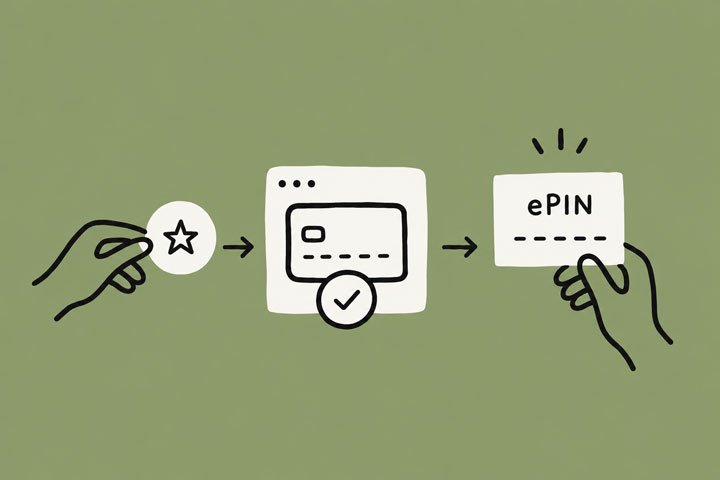
When the sponsor pays — buying an ePin with their own money and handing it to the recruit — the same decision suddenly has a price. Sponsors start doing, unprompted, exactly what you wish you could train them to do: qualifying prospects, choosing people they genuinely believe will sell, and following up after enrollment to protect their investment. The joining package becomes the sponsor’s CAC, spent only where the sponsor projects a return. No compliance memo ever produced that behaviour; a price tag produces it automatically.
The Recruit’s Side: Zero-Risk Entry Activates Faster
From the newcomer’s chair, the offer transforms. “Pay ₹3,000 to find out if this works for you” is the single objection every field pitch stumbles on. “Your first package is on me — prove me right” removes it entirely, and adds two forces on top:
- Reciprocity. A funded start creates a felt obligation that a purchased start doesn’t. Behavioural research on reciprocity is unambiguous — people work to repay what they’re given — and in this case repaying means the exact behaviour you want: activating, selling, showing up to training.
- Selection signalling. Being chosen — “I only sponsor people I’d invest in” — reframes joining from buying into a scheme to being recruited into a team. That’s a psychological difference your best leaders already understand instinctively.
The recruit risks time instead of money. Recruits who won’t even risk time were never going to produce; the model filters them out at zero cost to anyone.
The Regulatory Tailwind
Here the argument stops being merely smart and becomes aligned with where the law already went. India’s Consumer Protection (Direct Selling) Rules, 2021 flatly prohibit direct selling entities and direct sellers from charging any entry fee or subscription fee — participation itself cannot be sold. Globally, the pattern regulators hunt for is money flowing upward for the right to participate rather than for products moving to consumers.
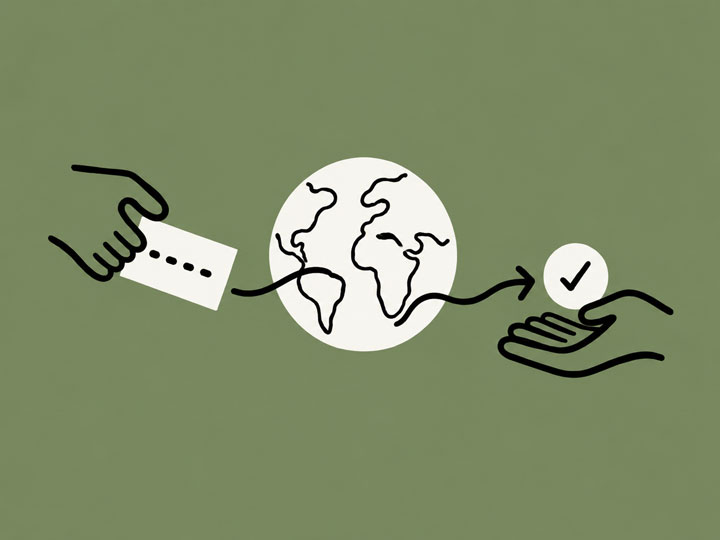
A sponsor-funded ePin model is naturally shaped away from that pattern. The ePin denominates a real product package — inventory the new member will retail or consume, not a naked admission ticket. The newcomer pays nothing to participate. Money flows down the network at enrollment, from the established member to fund the new one’s starting stock, and flows back up only as a consequence of actual sales. Describe that structure to a regulator and you’re describing the opposite of a pyramid’s cash flow. Few plan-design decisions buy this much compliance posture this cheaply.
Why ePin Is the Instrument That Makes It Practical
The idea “I’ll cover your start” predates software; what it lacked was a clean mechanism. Without one, sponsor funding means transferring money to a prospect and hoping they register — no guarantee the funds become an enrollment, no record of who funded whom, and awkwardness on both sides. The ePin’s custody mechanics, covered earlier in this series, solve every piece:
- The sponsor’s money converts to a code that can only become an enrollment — it can’t be spent on anything else.
- The transfer is logged: who bought the pin, who received it, who redeemed it, timestamped end to end. Sponsor funding at scale without this audit trail would be an accounting fog; with it, every funded joining is a traceable transaction.
- The gift is grantable in person, at the moment of decision, closing the enrollment in the same conversation — the same momentum argument that makes ePin superior to gateways generally, now doing double duty.
The Honest Counterarguments — and Their Settings
“Free entry means no commitment.” Partly true, and the fix belongs in the plan, not the pitch: gate the sponsor’s recovery behind the recruit’s production. If the fast-start bonus and matching commissions only flow once the funded recruit hits an activation milestone — first retail orders, first PV threshold — then the sponsor’s investment thesis and the recruit’s activation are the same event. The sponsor isn’t just hoping the recruit works; they’re financially positioned as their coach from day one.
“Sponsors will buy positions, not people.” The abuse case is a sponsor redeeming ePins into phantom accounts to fill a matrix or balance a binary leg. The counters are standard hygiene made mandatory: KYC on every new account, one account per identity, and activity requirements before a position counts toward the funder’s qualification. A phantom account that must produce retail volume before it benefits anyone is a phantom account not worth creating.
“My leaders can’t afford to fund everyone.” Correct — and they shouldn’t. Sponsor funding is a strategy, not a mandate: leaders deploy it on their highest-conviction prospects and let ordinary self-funded joining remain available. The point is that the option exists and the incentives around it are sound. Some of your best builders will fund aggressively and treat recovery rates as their personal unit economics; others won’t. Both are fine. What matters is that your platform supports the behaviour cleanly — in MLMOrbit, transferable ePins, the custody log, KYC hooks, and configurable fast-start conditions are native, so sponsor-funded joining is a plan decision you switch on, not a workaround you improvise.
Every maturing industry eventually learns that acquisition costs belong with the party who profits from the acquisition. Direct selling has resisted that lesson longer than most because the inverted model quietly subsidised careless recruiting — and careless recruiting looked like growth until the churn arrived. Sponsor-funded joining through ePin puts the cost where the information and the upside already sit, hands the newcomer a risk-free start regulators would struggle to criticise, and lets your compensation plan enforce the discipline. The sponsors who embrace it will show you, in their recovery rates, exactly who your real builders are.
0 Comments